28/01/2026
ASML’s record year underscores how AI demand is reshaping chipmaking — and why suppliers are still cutting costs
ASML’s blockbuster 2025 results show how AI spending is flowing deep into the semiconductor toolchain, even as the company moves to streamline operations with planned job cuts.
- Published
- Revised
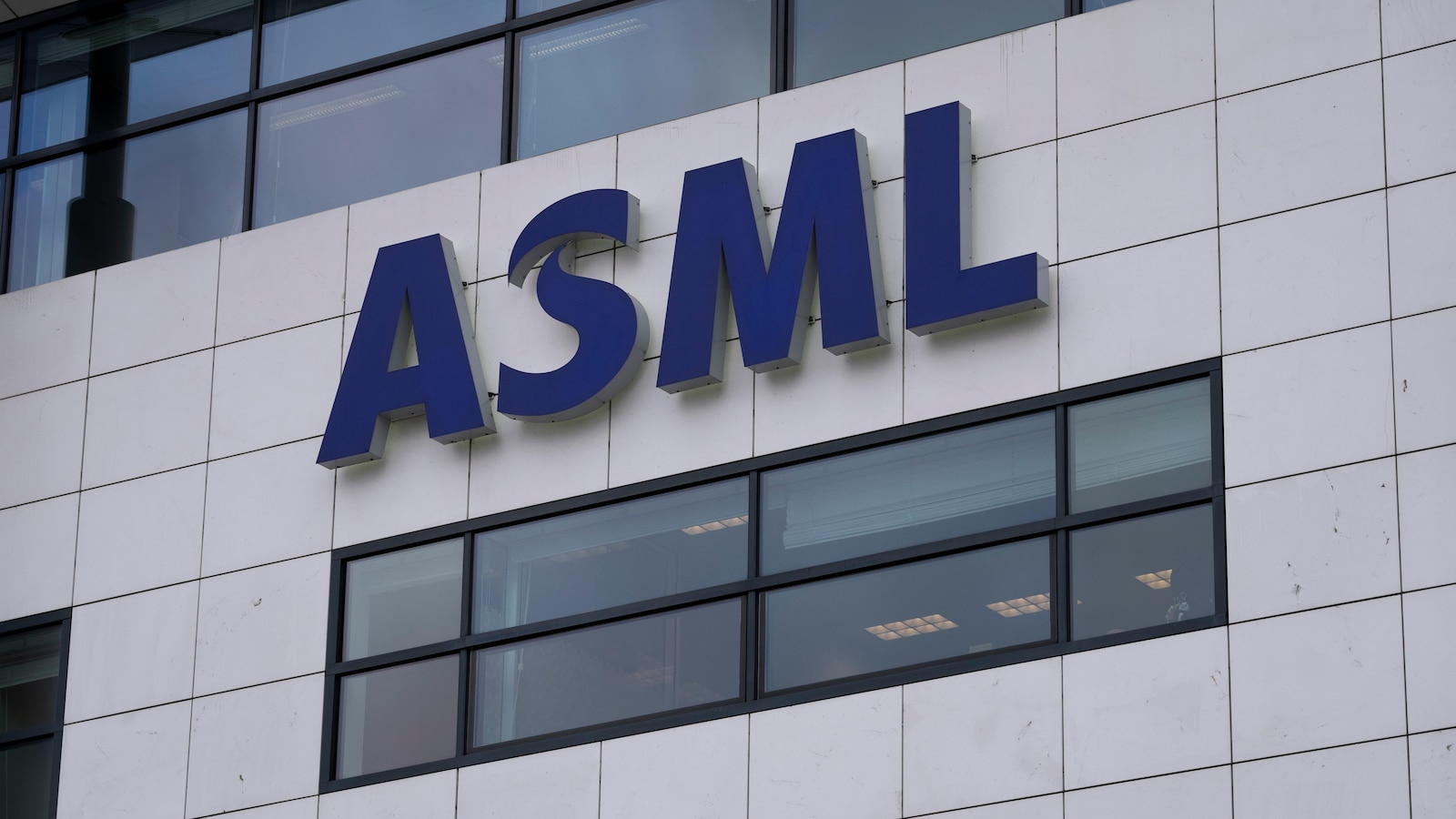
THE HAGUE, Netherlands — ASML’s record 2025 profit is being read across the tech industry as a clear indicator of how sustained the AI investment wave has become. The company, which supplies advanced lithography systems essential for producing cutting-edge chips, said AI-related demand helped drive 2025 net profit to 9.6 billion euros and revenue to 32.7 billion euros, while also pointing to strong customer order momentum and confidence in medium-term capacity plans.
For technology markets, ASML’s results matter because the company sits upstream from almost every major AI hardware roadmap. When cloud giants and chipmakers ramp AI infrastructure, the chain reaction eventually hits fabs — and fabs, in turn, need the specialized tools ASML sells. That makes ASML’s bookings, revenue, and guidance a practical, real-world “read-through” on how aggressively the industry expects AI compute needs to grow over the next several years.
But the same announcement carried a second message: ASML plans to cut about 1,700 jobs, roughly 4% of its workforce. The company described the move as part of an effort to streamline and focus on engineering and innovation. In other words, even winners in an AI-boosted cycle are optimizing for execution speed, cost discipline, and organizational efficiency, rather than simply expanding headcount alongside demand.
The contrast highlights a defining feature of the current tech era: growth and restructuring can happen at the same time. AI infrastructure builds are capital-intensive and operationally complex, and the pressure to deliver on time — while navigating supply constraints, export controls, and ever-more-advanced manufacturing nodes — makes productivity improvements a strategic priority.
Geopolitics also remains part of the story. ASML’s growth is occurring despite Dutch government restrictions on exporting certain high-end systems, limits that are widely viewed as aligned with U.S. policy aimed at constraining China’s access to advanced chipmaking technology. Those controls add complexity to sales planning and long-term demand forecasting, especially for a company whose products sit at the center of global semiconductor competition.
ASML said it expects 2026 to be another growth year. For the broader tech sector, the takeaway is that AI demand is not only about headline GPU launches — it is pulling on the deepest parts of the manufacturing stack, from lithography capacity to the organizational choices suppliers make to stay fast, reliable, and profitable while the stakes keep rising.