26/01/2026
Israel recovers remains of last hostage in Gaza as ceasefire enters tougher phase
Israel says it has recovered the remains of the last hostage held in Gaza, completing a key requirement of the ceasefire’s first phase. Attention now turns to a more complex second phase that includes border arrangements, security questions, and the enormous task of rebuilding amid ongoing humanitarian strain.
- Published
- Revised
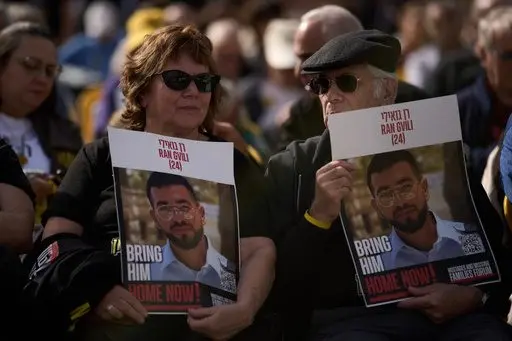
Remains recovered as first phase concludes
Israel announced it has recovered the remains of Ran Gvili, described as the last hostage in Gaza, a development that closes a central chapter of the ceasefire’s initial phase. The recovery follows a focused Israeli operation in northern Gaza and fulfills a condition tied to moving forward with the next steps of the agreement.
The hostage issue has been emotionally and politically pivotal since the Oct. 7, 2023 Hamas-led attack, which triggered a prolonged war and repeated negotiations over releases. Israel’s confirmation that the final hostage remains have been recovered has intensified debate inside the country about what security guarantees, if any, can justify advancing to the second phase.
A complicated second phase: borders, security, and reconstruction
The ceasefire’s next phase is expected to be far more difficult than exchanging hostages and remains. It involves practical questions such as reopening border crossings, setting rules for movement, and addressing who provides security and governance in Gaza. These issues are contentious because they touch the core interests of Israel, Hamas, regional actors, and international mediators.
Even if negotiators agree on a framework, implementation will be hard: Gaza’s infrastructure has been heavily damaged, medical needs remain acute, and families are still coping with displacement and loss. Meanwhile, the possibility of renewed violence continues to hover over the process, making every step politically risky for leaders on all sides.
Humanitarian conditions and access to Gaza
The humanitarian situation remains dire and is expected to shape the next phase of talks. Palestinians hope a deeper ceasefire will enable travel for medical care, increased aid flows, and rebuilding of basic services. But skepticism persists because previous pauses in fighting have been fragile and because many details remain unresolved.
Separately, Israel’s Supreme Court is reviewing a petition seeking broader journalist access to Gaza, underscoring how information, verification, and transparency have become central to international perceptions of the conflict. The court review also highlights tensions between security restrictions and demands for independent reporting.
Key questions ahead
- What security framework will govern Gaza during the second phase of the ceasefire?
- How will border crossings and movement be managed, and by whom?
- What guarantees will be required for reconstruction and long-term stability?
For now, the recovery of the final hostage remains offers a moment of closure for one family and a procedural milestone for negotiators, but it also exposes the harder work that comes next: translating a ceasefire text into a lasting, enforceable reality.