25/01/2026
CES 2026 puts AI and robotics at center stage as chipmakers unveil new platforms
At CES in Las Vegas, Nvidia, AMD, Intel and others showcased new AI-focused chips, models and robotics, highlighting how AI is being built into products across industries.
- Published
- Revised
AI everywhere: the theme of CES 2026
CES 2026 in Las Vegas underscored the technology industry’s shift from experimenting with artificial intelligence to embedding it across product lines. Major chipmakers and consumer brands used the opening day to frame AI as an on-device capability, a cloud service, and an industrial platform—often all at once—while robotics demonstrations became a crowd magnet.
The show’s message was clear: AI features are becoming a default expectation, and companies are competing on who can deliver better performance, lower cost, and more compelling real-world applications. From entertainment to transportation and home devices, the presentations suggested that AI is moving beyond chat interfaces into systems that sense, plan, and act.
Nvidia emphasizes “physical AI” and new models
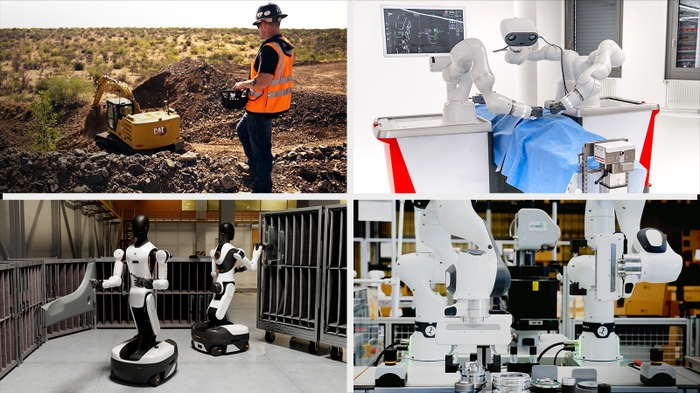
Nvidia CEO Jensen Huang highlighted what the company calls “physical AI”—models trained in simulated environments and then deployed into machines that operate in the real world. Nvidia showcased Cosmos, a foundation model designed to simulate environments governed by physics, and introduced Alpamayo, an AI model built for autonomous driving. Huang also said Nvidia’s next-generation AI superchip platform, named Vera Rubin, is in full production and announced a partnership with Siemens.
While the announcements focused on serious infrastructure, a moment that captured the audience featured small chirping robots on stage—an example of how robotics demos can translate abstract AI concepts into something immediately understandable for consumers.
AMD, Intel, and the broader product wave
AMD announced new Ryzen AI processors as it pushes deeper into AI-enabled personal computers, and it also promoted its latest gaming-focused chip, the Ryzen 7 9850X3D. Intel discussed its upcoming Panther Lake chip and a handheld gaming effort, reflecting a race to define what next-gen client devices look like when AI accelerators are standard hardware.
Beyond chips, CES featured companies positioning AI as the brain for new categories. Uber, for example, showcased an autonomous “robotaxi” concept with partners Lucid Motors and Nuro, emphasizing the in-cabin experience as a differentiator. The day’s exhibits suggested that competition will increasingly revolve around how well AI integrates into complete products, not just how fast a model runs.